

Myopia Management for Children
Protecting Vision Today.
Safeguarding Eye Health for the Future.
Myopia is more than needing glasses — it's a condition where the eye grows longer than normal, increasing prescription strength and lifetime risk of serious eye disease.
At VODA Eyecare, we provide proactive, research-based myopia management to slow progression and support healthy eye development.
FIRST VISIT
Complimentary First Screening
for Every Child
Every child receives a complimentary axial length measurement at their first myopia consultation. Axial length is the most reliable indicator of progression — often detecting change before prescription shifts are noticeable. We track this using the Topcon Myah, so treatment is based on actual eye growth, not just prescription numbers.
CLINICALLY PROVEN TREATMENT OPTIONS
01
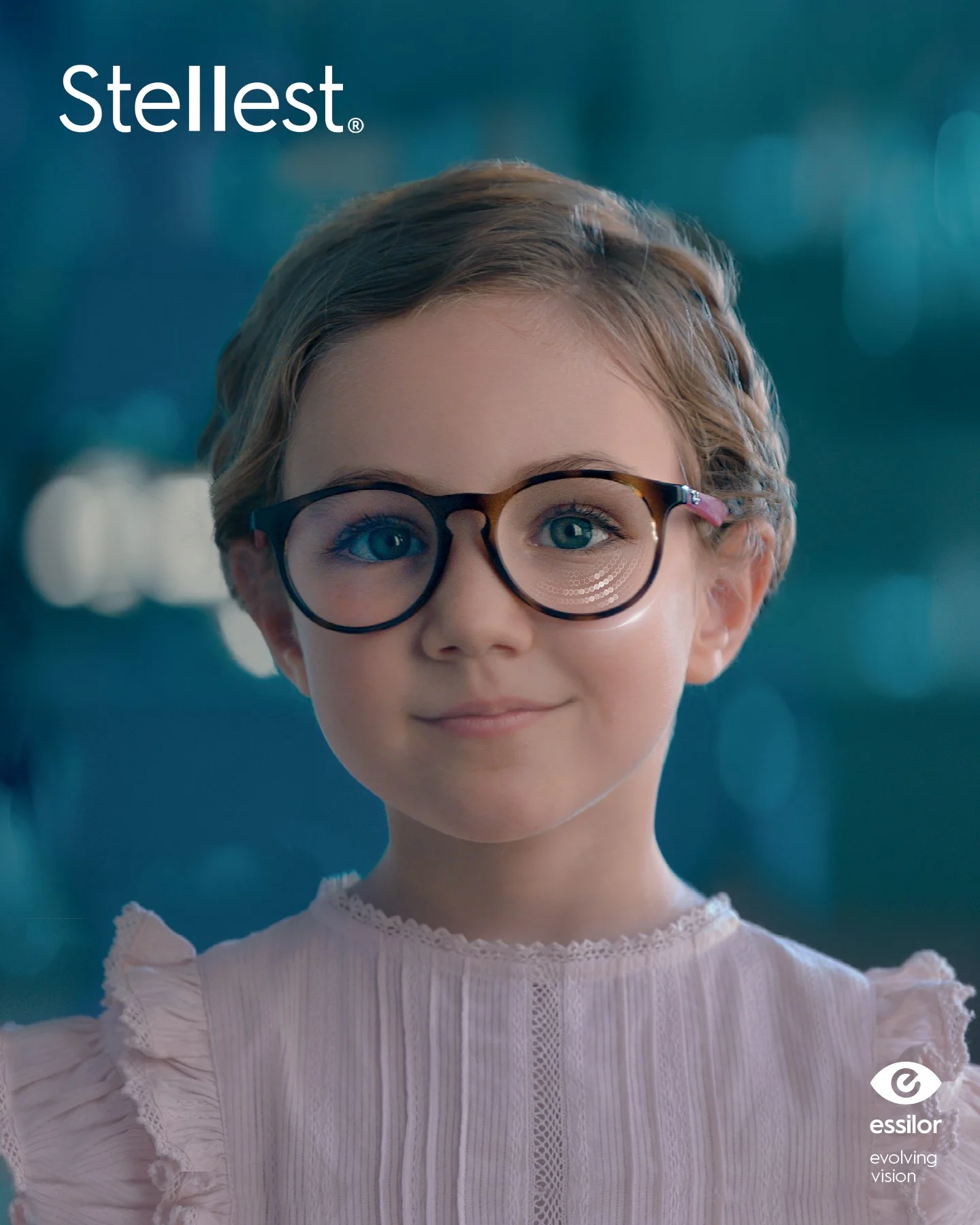
Essilor Stellest™ Lenses
(FDA-Authorized)
Stellest lenses use H.A.L.T. Technology — 1,021 lenslets arranged across 11 rings — to create myopic defocus that signals the eye to slow its elongation. They look and wear like ordinary glasses.
CLINICAL EVIDENCE
In the FDA-reviewed two-year clinical study, Stellest lenses reduced myopia progression by 71% and axial elongation by 53% compared with single-vision lenses. Individual results vary.
71%
less myopia progression
vs. single-vision lenses, full-time wear
53%
less axial elongation
slower eye growth vs. standard lenses
Best for: Children ages 6–12 who prefer glasses, especially those with faster progression.
02
CooperVision MiSight® 1 Day
(FDA-Approved)
Daily disposable contact lenses with a dual-focus design that corrects vision while slowing eye growth. Backed by the longest dataset of any myopia control contact lens — 7 years — with no significant rebound effect after stopping.
59%
reduction in myopia progression
vs. single-vision daily disposables
52%
slowing of eye growth
axial elongation vs. control group
7 yr
sustained effectiveness confirmed
longest dataset for any myopia control CL
0
significant rebound effect
after discontinuing treatment
Best for: Active children who prefer contacts, or families prioritizing long-term safety data.
03
Low-Dose Atropine
for Faster Progression
Compounded low-dose atropine may be prescribed off-label for selected children with progressive myopia. Treatment recommendations are based on the child’s age, progression rate, axial-length changes, prescription, family history and other clinical factors. Potential benefits, limitations and side effects are discussed before treatment.
Best for: Children with rapid progression (>−0.75D/year) or those needing additional control beyond optical treatment alone.
04
Combination Therapy
Tailored to Each Child
Some children achieve the best results with a customized combination plan. We factor in age, prescription level, axial length growth rate, family history, and lifestyle to build the right approach for each child.
WHY SLOWING MYOPIA MATTERS
More Than a
Stronger Prescription
Higher myopia increases lifetime risk of glaucoma, retinal detachment, early cataracts, and myopic macular degeneration. Slowing progression early reduces that risk — the earlier we start, the more vision we protect.
THE VODA APPROACH
Education Is Part
of Treatment.
We take time to explain findings, answer questions, and partner with families — so parents feel confident and children feel comfortable throughout the process. Myopia management is not a one-size-fits-all solution. It is a carefully guided journey, tailored to each child, revisited at every visit.
This is the moment to act. Myopia that starts young tends to progress fast. The earlier we intervene, the more vision we protect.
SCHEDULE A MYOPIA CONSULTATION
Early Treatment Provides
the Strongest Protection.
Let us identify where your child's vision is today — and build a plan to protect where it's going.